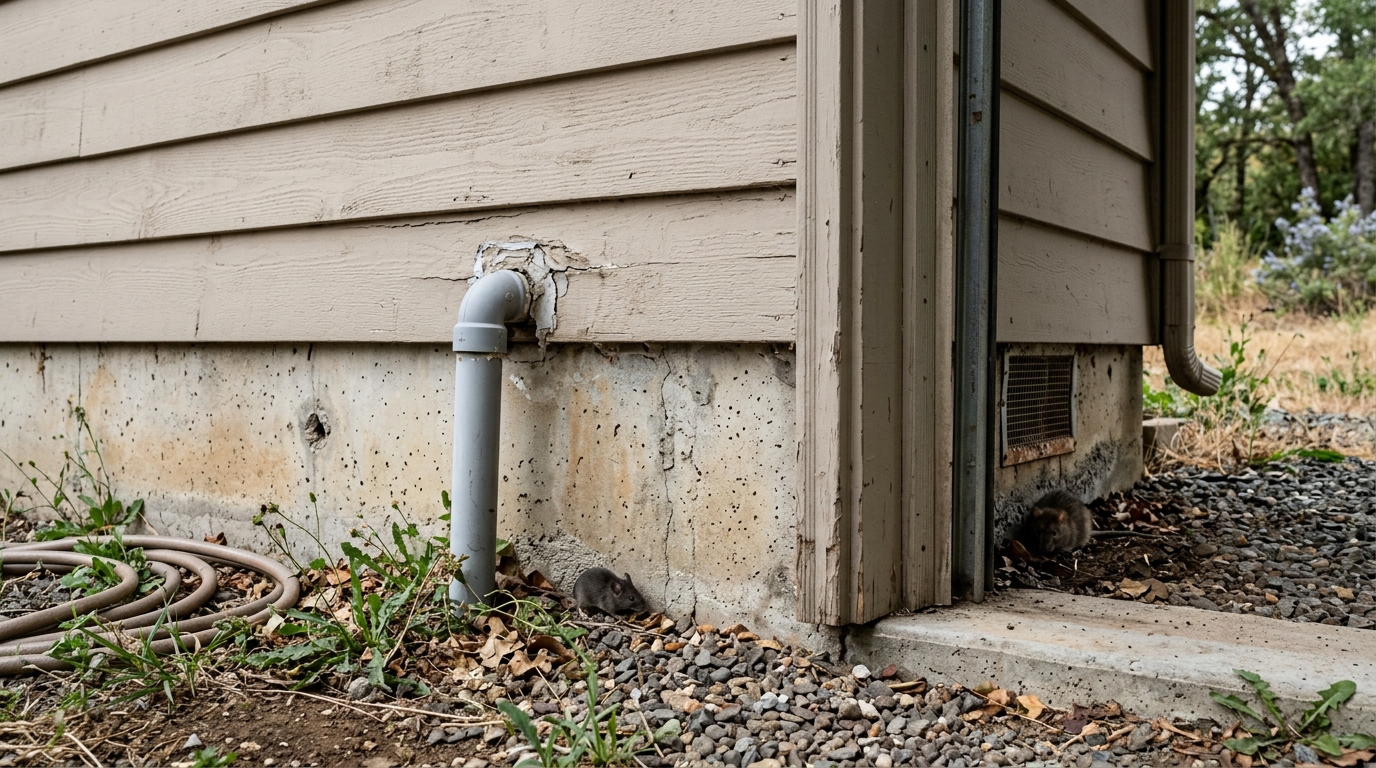
Of all the pest calls we receive at A-One Natural Exterminators, rodent infestations are among the most urgent — and the most preventable. A house mouse can squeeze through any gap larger than ¼ inch. A Norway rat needs only ½ inch. Given that most homes have dozens of such gaps around pipes, vents, and foundation cracks, the question isn't whether rodents can get in — it's whether you've given them a reason to try.
Understanding Why Rodents Target Your Home
Rodents look for three things: food, water, and shelter. Oregon's cold, wet winters make warm homes irresistible. From October through March, rodent activity in Josephine and Jackson County homes spikes dramatically as outdoor food sources dry up and temperatures drop. By the time you hear scratching in the walls or find droppings in your pantry, a colony is already established.
The 10 Most Common Entry Points
- Gaps around pipes — Where plumbing enters the wall, there's almost always a gap. Check under every sink.
- Foundation cracks — Even hairline cracks widen over time. Inspect your foundation annually.
- Garage doors — Worn weatherstripping at the bottom is a highway for mice.
- Roof vents and soffits — Rats are excellent climbers. Damaged vent covers are a top entry point.
- Dryer and bathroom exhaust vents — Flapper vents that don't seal completely are common entry points.
- Crawl space vents — Old-style wire mesh rusts and gaps over time.
- Door gaps — The gap under an exterior door should be no larger than 1/8 inch.
- Utility penetrations — Cable, internet, and electrical conduit entry points are rarely sealed properly.
- Weep holes in brick — Necessary for ventilation but accessible to mice without proper covers.
- Tree branches — Any branch touching or overhanging your roof is a rodent ladder.
Eliminating Food and Water Sources
Exclusion alone isn't enough if your property remains attractive. Store all food — including pet food — in hard-sided containers with tight lids. Keep compost bins away from the house and use rodent-resistant models. Clean up fallen fruit from trees immediately. Fix any dripping faucets or standing water under sinks, as even small water sources sustain a colony.
The Right Way to Seal Entry Points
Not all sealants are created equal — mice can chew through caulk, foam, and wood. Use these rodent-proof materials:
- Steel wool + caulk — Pack steel wool into gaps, then seal over with caulk. Rodents cannot chew through steel wool.
- Hardware cloth (1/4 inch mesh) — Galvanized steel mesh for covering vents, crawl space openings, and larger gaps.
- Sheet metal — For gaps at the base of doors, garage door thresholds, and foundation penetrations.
When to Call a Professional
If you've found droppings, heard activity in walls or ceilings, or noticed gnaw marks on wiring or insulation, the infestation has already taken hold. Store-bought traps rarely eliminate a full colony — they catch individuals while the breeding population continues to grow. Professional exclusion identifies and seals every entry point, eliminating the colony at the source rather than managing symptoms indefinitely.
A-One Natural Exterminators offers free estimates for rodent control throughout Southern Oregon. Call us at (541) 472-1094 or visit our contact page to schedule an inspection.